BPC-157 and TB-500 Angiogenesis: Vascular Repair Research
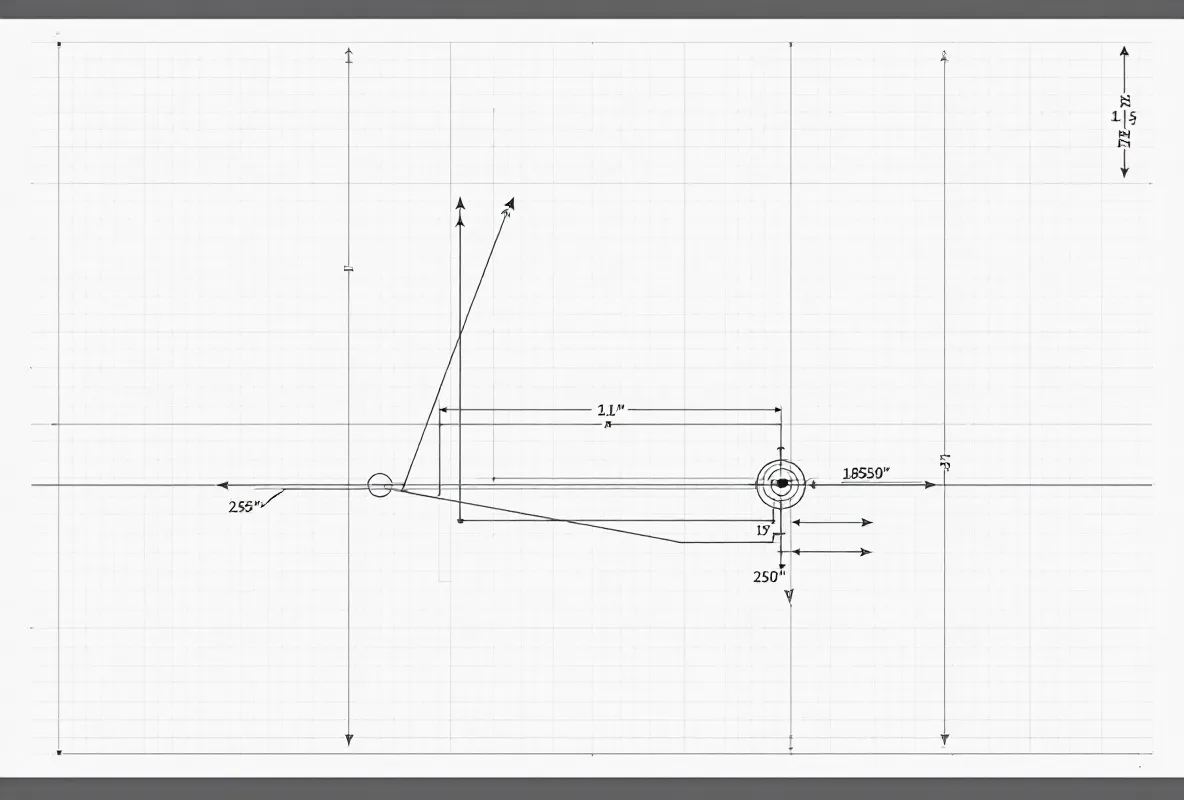
Two routed branches converging on a repair node — the VEGFR2-Akt-eNOS branch from BPC-157 and the endothelial-migration branch from Thymosin Beta-4. The measured spans are solid; the combination and the human cardiac data are dashed.
The two angiogenesis branches
BPC-157 TB-500 angiogenesis is the vascular thread that ties the two components of the Wolverine blend together, and it is the lens this site reads the pairing through. BPC-157 and TB-500 angiogenesis runs along two distinct routes that meet, in the blend rationale, at a single tissue-repair node. On the drawing, each branch is a measured vessel path; the leader joining them into a combination effect is dashed.
The first branch is BPC-157. It is pro-angiogenic via VEGFR2: it up-regulates VEGFR2 expression and promotes VEGFR2 internalization, with downstream VEGFR2-Akt-eNOS pathway activation [2]. The internalization step matters — the study showed that blocking endocytosis blocked the effect, which is the kind of mechanistic block-and-rescue design that separates a real pathway from a correlation [2]. Across the chick chorioallantoic membrane, rat hindlimb ischemia, and human vascular endothelial cells, the result was increased vessel density and accelerated blood-flow recovery in ischemic muscle [2].
The second branch is Thymosin Beta-4, TB-500's parent protein. It promotes angiogenesis via endothelial migration — a different route to new vessels than VEGFR2 up-regulation, which is precisely why the two are described as complementary rather than redundant. In normal and aged rodents, Thymosin Beta-4 promoted angiogenesis, wound healing, and hair-follicle development by increasing angiogenesis and cell migration, restoring angiogenesis even in aged animals with otherwise poor wound healing [6]. The consolidated review lists angiogenesis among its core regenerative activities, alongside actin binding, migration, and anti-scarring [4].
Do BPC-157 and TB-500 promote angiogenesis? {#do-they-promote-angiogenesis}
In research models, yes — by distinct routes. BPC-157 up-regulates VEGFR2 and promotes its internalization, with downstream VEGFR2-Akt-eNOS signaling, increasing vessel density and speeding blood-flow recovery in ischemic muscle [2]. Thymosin Beta-4 promotes angiogenesis via endothelial migration, including restoring angiogenesis in aged animals [6].
The vascular-tone thread
Angiogenesis is not the only vascular property reported for BPC-157. It has also been reported to modulate vasomotor tone — the contraction and relaxation of vessel walls — through the Src-Caveolin-1-eNOS pathway in rat vasculature and endothelial models [5]. That sits alongside its VEGFR2 activity as a second vascular mechanism, both routed through endothelial nitric oxide synthase. The convergence on eNOS is notable: two distinct BPC-157 mechanisms — receptor up-regulation and Src-Caveolin-1 signaling — both terminate at the same nitric-oxide effector, which is part of why the compound's vascular profile is described as coherent rather than scattered [2] [5].
This is where the angiogenesis lens meets the safety question. Pro-angiogenic, pro-migratory activity is the same property that, in other contexts, raises caution: Thymosin Beta-4 is overexpressed in several cancers and implicated in tumor angiogenesis, so the repair-promoting properties could theoretically support tumor progression. That concern is noted in the literature and compounds when two pro-repair signals are combined.
Is TB-500 bad for your heart? {#is-tb-500-bad-for-your-heart-angio}
There is no human cardiac-safety data for the TB-500 heptapeptide. BPC-157 has been reported to modulate vasomotor tone via the Src-Caveolin-1-eNOS pathway in animal and endothelial models [5], and 2025-2026 reviews stress that human safety data for both constituents are scarce and that both remain investigational [9] [10]. The cardiac question is open, not answered.
What the vascular evidence does and does not establish
The measured vascular spans are genuine. BPC-157's VEGFR2-Akt-eNOS angiogenesis is documented across multiple models with a mechanistic block-and-rescue design [2], and its vasomotor effect is traced to a defined Src-Caveolin-1-eNOS pathway [5]. Thymosin Beta-4's angiogenic and wound-healing activity is documented in normal and aged rodents [6] and consolidated in review [4]. Two separate vascular literatures, each with its own measured endpoints.
The dashed spans are equally real. There is no controlled study of the two peptides together for any vascular endpoint, no human vessel-density or blood-flow data for the blend, and no characterized human cardiac safety [9]. The convergence of the two branches on a single repair node is a rationale, not a measured joint. A 2025 systematic review of BPC-157 found no clinical safety data and made no mention of TB-500 or combination use [8], so even the well-studied half of the blend has no human vascular safety record to lean on.
There is also a direction-of-effect caution specific to angiogenesis. The same pro-angiogenic, pro-migratory properties that aid repair are implicated, for Thymosin Beta-4, in tumor angiogenesis and metastasis, so a pro-repair vascular signal is not automatically a benign one. The 2026 review of unapproved musculoskeletal peptides frames exactly this kind of compound as showing favorable animal-model repair but scarce human safety data and potential for serious harm [9].
For how the two components are paired in full, see the combination rationale and synergy claim; for the FDA and WADA position on both vascular-active peptides, see the Wolverine legal status and 503A compounding page.