BPC-157 TB-500 Dosage as Drawn in the Research Literature
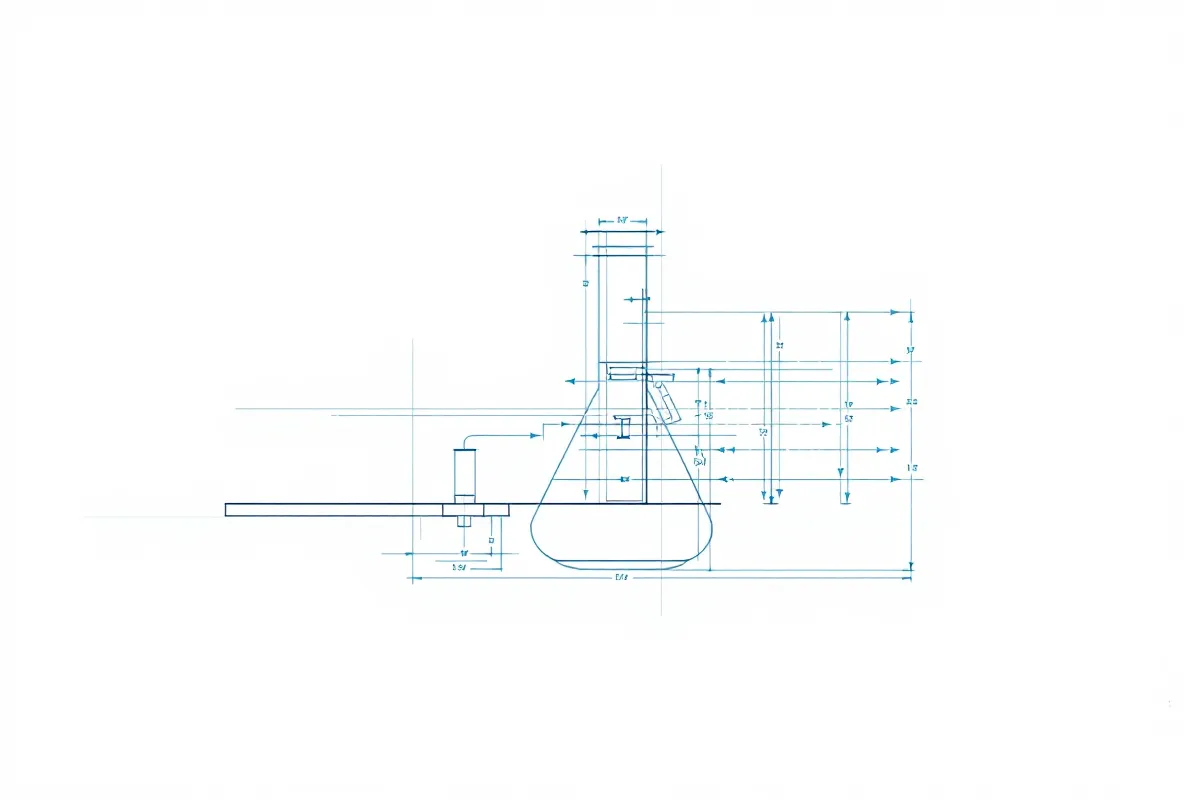
There is no validated dose for the blend. What exists are component-level figures from animal models, dimensioned here as a research-context schedule — not as guidance for any person.
BPC-157 TB-500 Dosage in the Research Literature
BPC-157 TB-500 dosage has no validated figure for the blend itself. No peer-reviewed combination dose-finding study exists. Commercial research-product labeling commonly pairs the two at fixed combined masses per vial — for example ~10 mg BPC-157 with ~10 mg TB-500, or a 20 mg combined vial — but no standardized composition or ratio is clinically validated. The figures below are research-context, drawn from animal studies of each component separately, and are not guidance for any person.
The BPC-157 component, in rodent models, is commonly expressed per body weight — frequently around 10 microg/kg and 10 ng/kg, with gastric-ulcer cytoprotection studied at 400-800 ng/kg in rats [1]. Note the unit span: the tendon work used microgram- and nanogram-per-kilogram figures [1], which is several orders of magnitude below the milligram-per-vial masses on commercial blend labels. A vial mass is not a dose, and the two cannot be reconciled into human guidance.
The TB-500 / Thymosin Beta-4 component spans a wide range: 2-18 mg/kg intraperitoneal in a rat embolic-stroke dose-response study, where the response was non-monotonic — 18 mg/kg gave no benefit, so higher was not better — and 150 microg twice weekly for six months in an mdx muscular-dystrophy study [4]. That non-monotonic result matters for the blend specifically: it directly undercuts the more-is-better logic behind community loading protocols, since the highest dose in that study produced no benefit [4].
Human single-agent reference points exist only for full-length Thymosin Beta-4, not the blend: intravenous Thymosin Beta-4 was well tolerated in early human safety and pharmacokinetic studies. None of these reference points is for the Ac-LKKTETQ heptapeptide that the blend actually contains, and none is for the two peptides together. Community loading-then-maintenance blend protocols have no controlled-trial basis [9].
Routes and half-life
The routes studied differ between the underlying animal work and community practice, and the gap is worth drawing explicitly. The predominant routes in the rodent efficacy studies for both peptides were intraperitoneal [1]; intravenous was used in human Phase 1 work on full-length Thymosin Beta-4 and a BPC-157 safety pilot. Subcutaneous and intramuscular are the predominant research-community routes for the blend, and they are not drawn from controlled human efficacy trials. So the routes most people associate with the Wolverine blend are not the routes that generated its evidence.
On half-life: no validated human pharmacokinetic half-life exists for either constituent at research-use doses, and none for the blend. BPC-157 elimination half-life was reported as <30 min in a rat and dog pharmacokinetic study — a short window that bears on how often the compound was given in animal work, not on any human schedule. For TB-500, no specific half-life is established for the heptapeptide; human data are for full-length Thymosin Beta-4, which showed dose-proportional pharmacokinetics with half-life increasing at higher doses. Two different molecules with two different clearance profiles do not yield a single blend half-life.
BPC 157 TB 500 Oral vs Injected {#bpc-157-tb-500-oral}
BPC 157 TB 500 oral framing rests mostly on BPC-157, which is studied as a stable gastric peptide [1] — the reason oral BPC-157 is even discussed. Blend oral products are marketed but lack validated pharmacokinetics, and TB-500's oral behavior as the Ac-LKKTETQ heptapeptide is not characterized at all. Injected routes — subcutaneous, intramuscular, intraperitoneal — dominate both the community practice and the underlying animal studies. Neither oral nor injected blend dosing has a human efficacy trial behind it [9], so the oral-versus-injected debate is, for the combination, a debate about two routes that have never been compared in a controlled human study of the blend.
One more route-related caveat applies specifically to TB-500. The chemical work that pinned down its identity characterized it as the N-terminal acetylated 17-23 fragment of Thymosin Beta-4 for doping-control reference purposes [7] — that is, the heptapeptide was synthesized and described primarily so it could be detected, not because a route-specific human efficacy program existed for it. The dose-and-route record for the fragment is therefore thinner than the volume of online protocols would suggest, and thinner still for the fragment paired with BPC-157.
Handling, identity, and why a blend dose is undefined
Both constituents are supplied as lyophilized powders for research use, reconstituted in bacteriostatic or sterile water and refrigerated. A common community practice is to reconstitute the two peptides separately or in a shared vial. Product identity, purity, and the actual BPC-157:TB-500 ratio in unregulated Wolverine material are not guaranteed — so even where a label prints two masses, the contents of the vial are not independently verified outside formal study conditions.
That uncertainty compounds an existing identity gap. TB-500 as sold is the Ac-LKKTETQ heptapeptide (~889 Da), but most efficacy data attributed to it were generated with full-length Thymosin Beta-4 (~4963 Da) [7]. So a blend dose would have to specify not just two masses and a ratio, but which TB-500 the data even refer to — and no study does. A dose figure that cannot name the molecule it describes is not a usable dose figure.
The combination's human efficacy and safety are unproven, and a 2026 review of unapproved musculoskeletal peptides stresses that such compounds carry potential for serious harm and sit largely outside regulatory oversight [9]. Fixed-ratio vials and loading protocols should not be read as validated dosing. This page is research context, not guidance: it describes what was administered to which species at which dose by which route, and stops there. For the full evidence picture, see the Wolverine blend research summary; for the regulatory position, see the FDA and WADA status of BPC-157 and TB-500.